Carpet area vs super built-up area: what you are actually buying
Carpet area vs super built-up vs built-up area: what you actually own, how builders inflate the number, and what RERA now requires them to state.
PropWatch Editorial6 min read

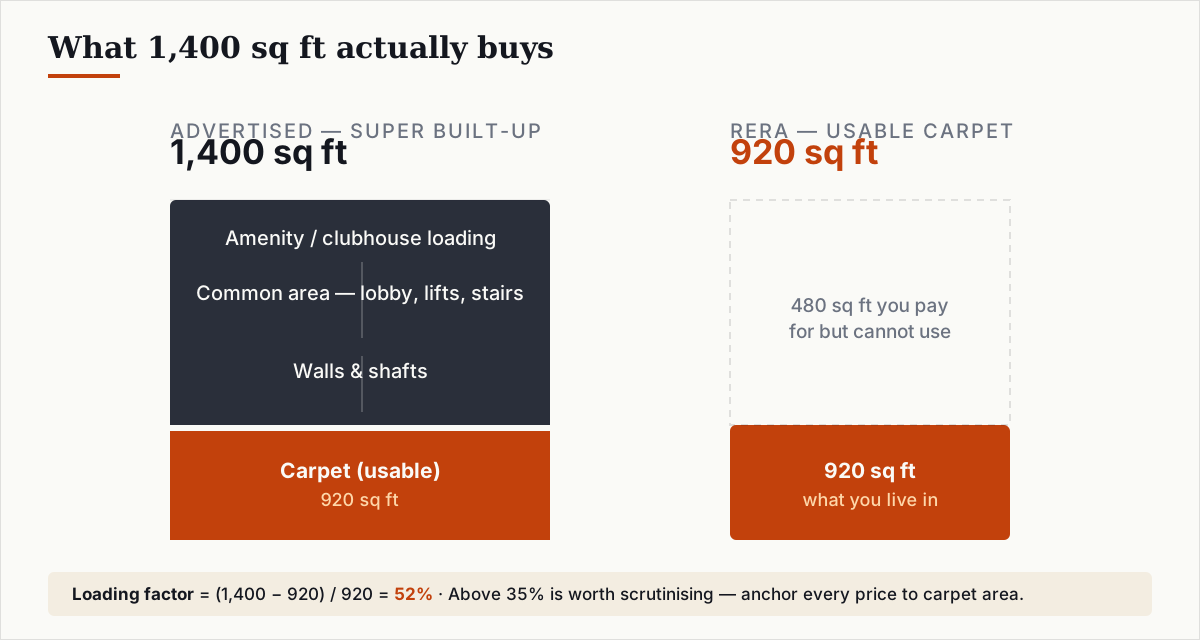
A builder quotes 1,400 sq ft. The flat you actually live in is 920 sq ft. The difference — 480 sq ft — is a lobby share, a stairwell allocation, a clubhouse loading, and wall thickness you are paying for but cannot use. This gap is legal, disclosed in the fine print, and almost never explained clearly before booking.
Three numbers, one flat
Indian builders historically marketed flats in super-built-up area, which bundles the carpet area of the unit with a proportionate share of common areas — lifts, lobbies, staircases, corridors, gymnasium — and sometimes amenity buildings and open areas depending on how aggressively the builder defines 'common'. Built-up area is an intermediate measure: carpet area plus the area of walls bounding the unit. Neither built-up nor super-built-up area tells you how much usable floor space you have.
What RERA changed
Section 2(k) of the Real Estate (Regulation and Development) Act, 2016 defines carpet area as the net usable floor area of an apartment, excluding the area covered by external walls, areas under service shafts, the exclusive balcony or verandah area, and the exclusive open terrace area. Under RERA, every registered project must disclose and sell by carpet area. The sale agreement must state the carpet area, and the price must be computed on that basis.
This does not mean super-built-up area has disappeared from marketing. Builders still quote it because it makes the flat sound larger. The legal obligation is to sell by carpet area; the commercial incentive is still to advertise by super-built-up area. A buyer who does not check the RERA disclosure will encounter the gap at registration.
How to find the actual carpet area
Go to the state RERA portal for the project's state (rera.karnataka.gov.in, maharera.maharashtra.gov.in, rera.telangana.gov.in, etc.). Search the project by its RERA registration number. On the project page, find the unit disclosure or apartment schedule — most portals list floor plan type, carpet area, balcony area, and any exclusive open terrace area, unit by unit. The carpet area stated in the RERA registration is the figure the builder is legally bound to deliver.
Computing the loading factor
The loading factor measures how much of the super-built-up area is common-area loading rather than usable flat. It is calculated as: (Super-Built-Up Area − Carpet Area) / Carpet Area × 100. A loading factor of 25 percent means one rupee in every four you spend goes to common areas. A loading factor above 35 percent is worth scrutinising: it either reflects a genuinely amenity-heavy project with large lobbies and a clubhouse, or it reflects an aggressive accounting of what counts as 'common area'.
Compare loading factors across shortlisted projects using their RERA carpet-area figures and the advertised super-built-up area. The project with the lower loading factor delivers more usable floor space per rupee, all else equal. A flat priced at ₹8,500 per sq ft super-built-up with a 40 percent loading factor works out to ₹11,900 per sq ft of carpet area. A flat priced at ₹9,200 per sq ft super-built-up with a 25 percent loading factor works out to ₹11,500 per sq ft of carpet area — cheaper on usable area despite the higher headline rate.
What to watch in the sale agreement
The RERA-mandated sale agreement must specify the carpet area. If the agreement you are asked to sign states a price per sq ft without specifying whether that is carpet or super-built-up, do not sign until it is corrected. A builder who insists on quoting price in super-built-up terms in the agreement is structurally non-compliant with RERA. If the flat is delivered at a carpet area smaller than the RERA disclosure, the buyer has a right to a proportionate refund or price reduction under Section 18 of the RERA Act.
The carpet area in the RERA project registration is the number to anchor to. Every other area figure — built-up, super-built-up — is a marketing construct with no legal definition in the sale agreement.
More from Red-Flag Guides
How to choose the right apartment in India: the buyer's checklist
A verification-first checklist for picking a flat — RERA status, OC, carpet area, builder track record, locality signals, payment schedule and title chain.
Red flags in a property sales pitch: 8 claims to verify before you sign
Guaranteed returns, artificial scarcity, pre-launch without approvals — 8 generic claim types in property sales and exactly what to ask or check for each.
How to verify a builder's RERA registration before you sign
A step-by-step walkthrough for checking RERA registration, project status, complaints and orders against any Indian builder on the relevant state portal.